The pottery wheel
Drag across the clay to pull the wall up and out. A ghost outline shows what the customer ordered — match it. Thin walls score higher and look better, but thin walls carry stress, and the risk bar tells you exactly how much.
Throw clay on the wheel. Fire it. When it cracks — and it will — trace the break with gold until the scar is the best thing on the piece. A mended pot is worth more than one that never broke. Free on Android.
Click any screenshot to zoom in for a full-size view.
The pottery game where the crack is the point. Throw clay on the wheel, fire it in the kiln, and when it breaks, trace the crack with gold. A mended pot is worth more than a flawless one. Free on Android.
Drag across the clay to pull the wall up and out. A ghost outline shows what the customer ordered — match it. Thin walls score higher and look better, but thin walls carry stress, and the risk bar tells you exactly how much.
Fire the piece and wait. The glaze settles, the colour comes up, and the cracks appear. No two firings break the same way — and the kiln takes real time, so set it firing and come back for the reveal.
Run your finger along a crack and molten gold pours into it. The seam catches the light and the piece is finished — and it sells for more than a flawless one. Gold repair is the goal here, not the consolation prize.
Twelve hand-written briefs — a water jar for a riverside inn, a tea bowl, a vase — then the game keeps generating them. Most patrons ask for gold seams, which means you have to let the pot break on purpose. Three stars are earned, not given.
Switch on slow mode and nothing cracks. No risk, no failure, no timer — just clay, wheel and glaze. It caps you at one star, and the game says so up front instead of hiding it.
Celadon, ash, iron, cobalt. A new glaze unlocks every three pots you finish — free, no purchase, no timer. Nine shapes and five glazes in all, unlocked by playing.
Clay on a spinning wheel. Drag to pull the wall up and out until it matches the outline of what the customer ordered. Go thin for value — and watch the risk bar.
Send it to the kiln and wait for the reveal. The glaze settles, the colour comes up, and the cracks appear where the walls were thinnest.
Trace every crack with your finger and gold pours in. Deliver the piece — a mended pot earns more than a flawless one — and take the next commission.
Kintsugi Pottery: Goldmend is the ideal pottery game app for anyone who wants a fast, reliable tool on Android.
A pottery game built on kintsugi: throw clay, fire it, let it crack, mend the break with gold. A mended pot sells for more. Free on Android.
Whether you need it for work, travel, or daily use, Kintsugi Pottery: Goldmend delivers a simple experience with no clutter.
Most pottery games are about making something perfect: throw, decorate, sell. Kintsugi Pottery: Goldmend is about what happens after it breaks. You throw wet clay on a spinning wheel and shape it with one finger. You fire it in the kiln. And when it cracks — because it will — you trace the break with gold until the scar is the most beautiful thing on the piece.
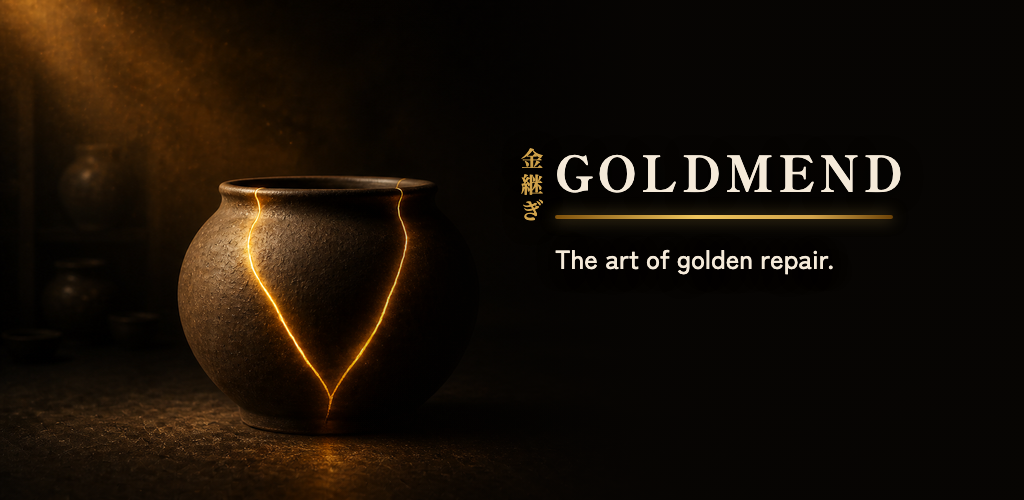
That is kintsugi, the Japanese art of repairing broken pottery with gold, and the game is built entirely around its one rule: a mended bowl is worth more than one that never broke.
Every potter learns the same lesson, and this pottery game makes you feel it. Drag across the clay to pull the wall up and out; a ghost outline shows what the customer ordered, and you match it. Thin walls score higher and look better — but thin walls carry stress, and the risk bar tells you exactly how much. The beautiful shape and the safe shape are not the same shape. How far you push it is the whole decision.
Then you fire it and wait. The kiln takes real time: set it firing, come back, and watch the glaze settle, the colour come up, and the cracks appear. No two firings break the same way.
Run your finger along a crack and molten gold pours into it. The seam catches the light and the piece is finished — and it sells for more than a flawless one. Gold repair is not the consolation prize in Goldmend; it is what the patrons are paying for.
Twelve hand-written commissions come with real briefs — a water jar for a riverside inn, a tea bowl, a vase. Some ask for a clean pot. Most ask for gold seams, which means you have to let it break on purpose. Three stars are earned, not given. After the twelve, the game keeps generating new commissions, so the run does not end.
Nine shapes and five glazes — celadon, ash, iron, cobalt among them — unlock as you play, a new glaze every three pots, free, with no timer and nothing to buy. A guided first pot teaches you the throw before anything is at stake. And when you want the wheel without the challenge, slow mode turns cracking off entirely: no risk, no failure, no timer — it caps you at one star, and the game tells you so up front.
Every pot you finish goes on the shelf in your exhibition, gold seams and all, and a Google Play leaderboard keeps your best score. The wheel hums, the clay drags, the kiln breathes, and every sound is generated live from what your hand is doing — built for phone speakers and headphones, with a mute button one tap away.
If you came looking for a relaxing pottery game rather than a hard one, this is built for you. There is no fail state you cannot recover from, no energy meter, and no timer at all in slow mode. Free on Android.
Goldmend is a Teamz Lab game — built to be played slowly.
Hire Teamz Lab on Upwork